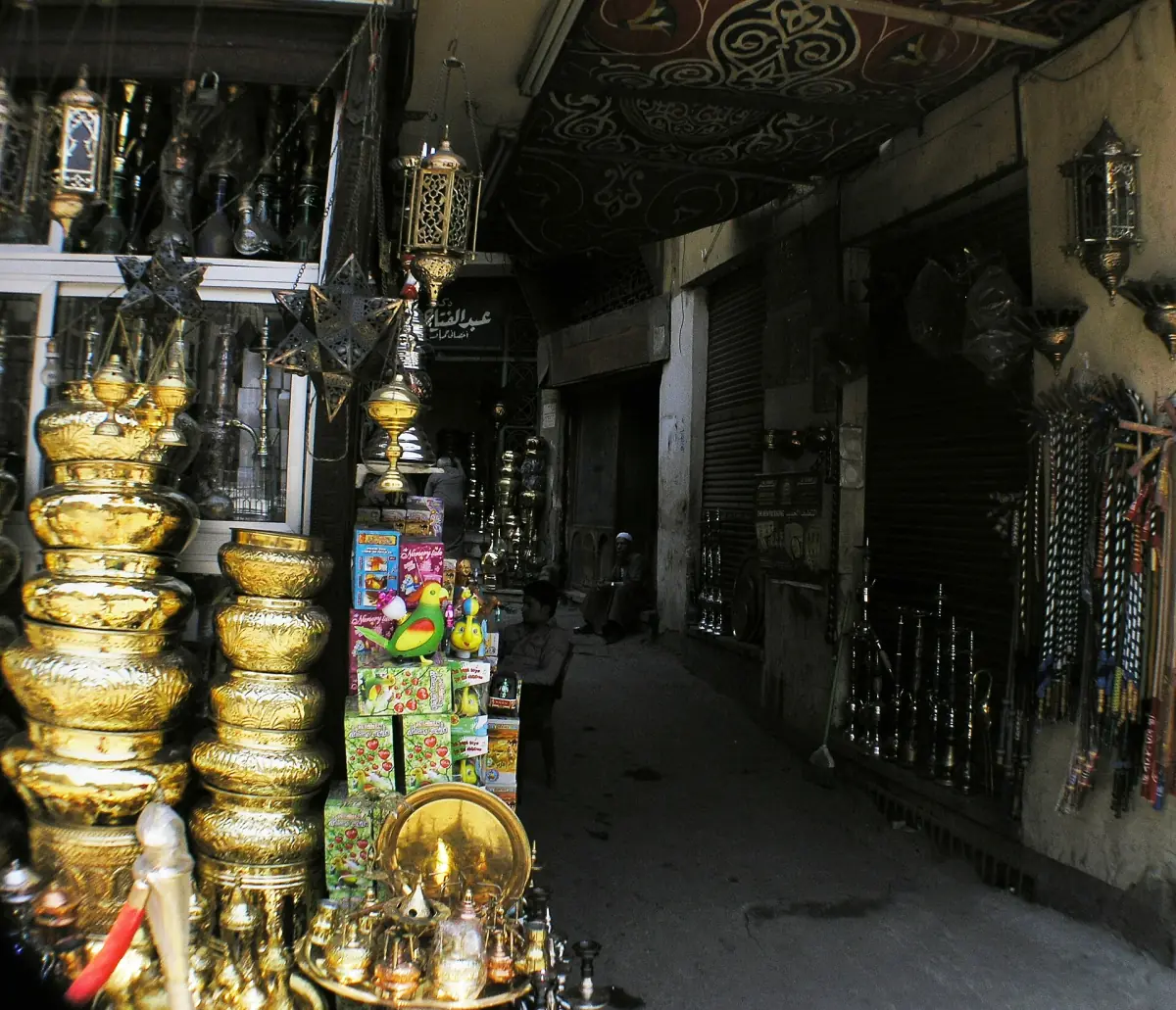
The history of Khan el-Khalili in short
Khan el-Khalili is a Mamluk-era market in the Al-Hussein quarter. It began as a caravanserai, an inn and warehouse for merchants, set in the city the Fatimid dynasty founded. Over the centuries it was torn down, rebuilt and enlarged. What you walk through today is a working bazaar with medieval roots, not a perfectly preserved original.
To see the places in this story on foot, join one of the Cairo tours through the bazaar and old city, or read about the neighbouring street in our Al-Muizz Street guide.
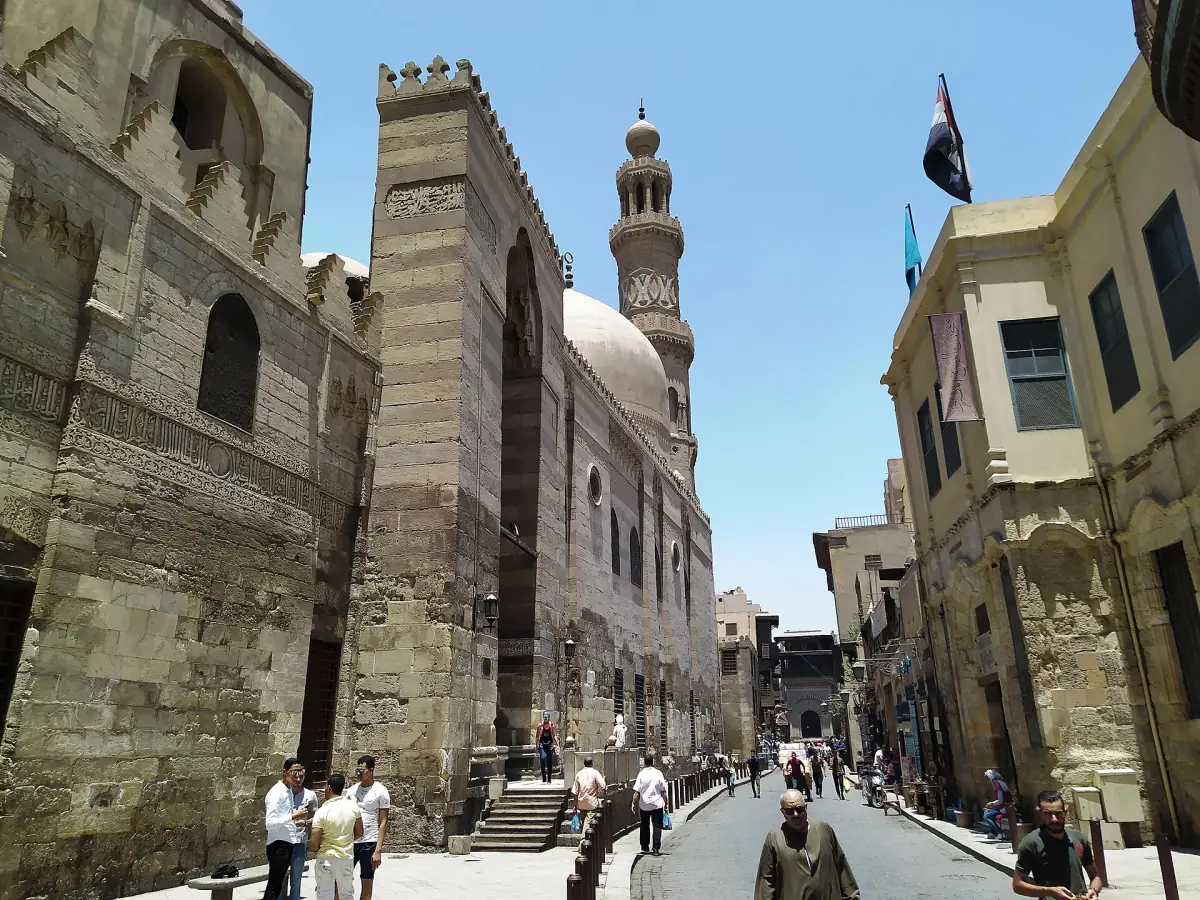
Timeline: Fatimids, Mamluks and after
The key dates in one table.
| Date | What happened |
|---|---|
| 969–1171 | The Fatimid period in Egypt. |
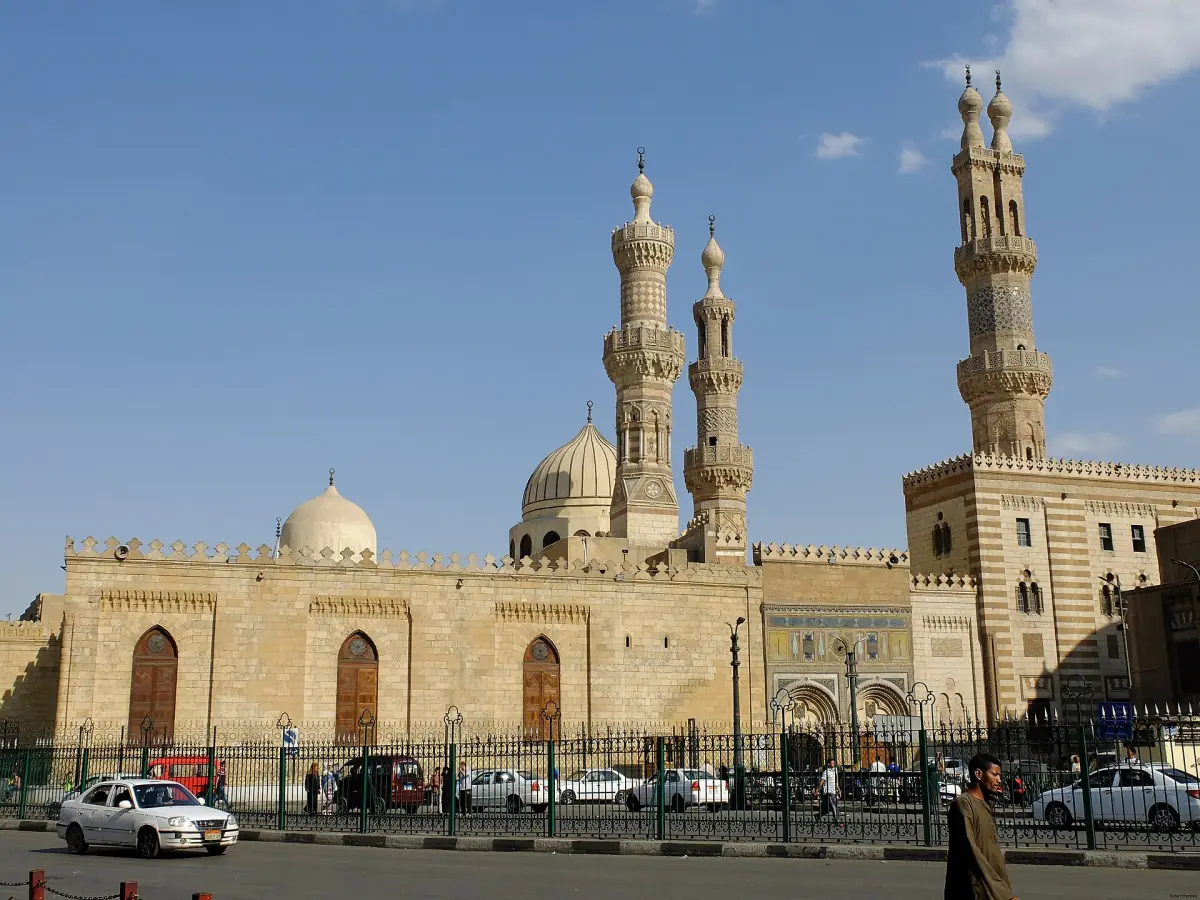
| 970–972 | Al-Azhar Mosque is built on the orders of the caliph al-Muizz. |
| 1380s | Jaharkas al-Khalili founds the caravanserai on the site of a former burial ground. |
| 1511 | Sultan al-Ghuri demolishes the khan and builds new lodgings, storerooms and shops. |
| 1771 | Café El-Fishawy is dated to this year; its first licence is from 1863. |
| 2005 and 2009 | Bomb attacks near the bazaar, now part of its history. |
| 2025 | Restoration works in the Al-Hakim and Al-Muizz area renew façades and shops. |
For most readers, the dates that matter are the Fatimid foundation of the city, the 1380s caravanserai and al-Ghuri's rebuilding in 1511, because they explain why the bazaar looks the way it does.
Our pick: a walk along the old main street
It spends about an hour and a half on Al-Muizz Street, the historic north-south axis of the medieval city, before the bazaar.
Hand-picked tours, booked through GetYourGuide. Prices are indicative starting prices in US dollars (as of October 2026). Tap a tour for live availability and the current price in your currency.
Khan el-Khalili tours with history
Guided walks through the bazaar and the medieval streets around it, with live prices and availability.
From a Fatimid city to a Mamluk caravanserai
The Fatimids ruled Egypt from 969 to 1171 and left their mark on the city: the line of Al-Muizz Street, the great gates and the mosque of Al-Azhar all belong to their world. The caravanserai came later. Jaharkas al-Khalili founded the inn in the 1380s, on the former Za'afran burial ground.
That is why you will read of a Mamluk-era bazaar inside a city of Fatimid origin: the streets were laid out under one dynasty and the market grew under another.
Al-Ghuri and the rebuilt khan
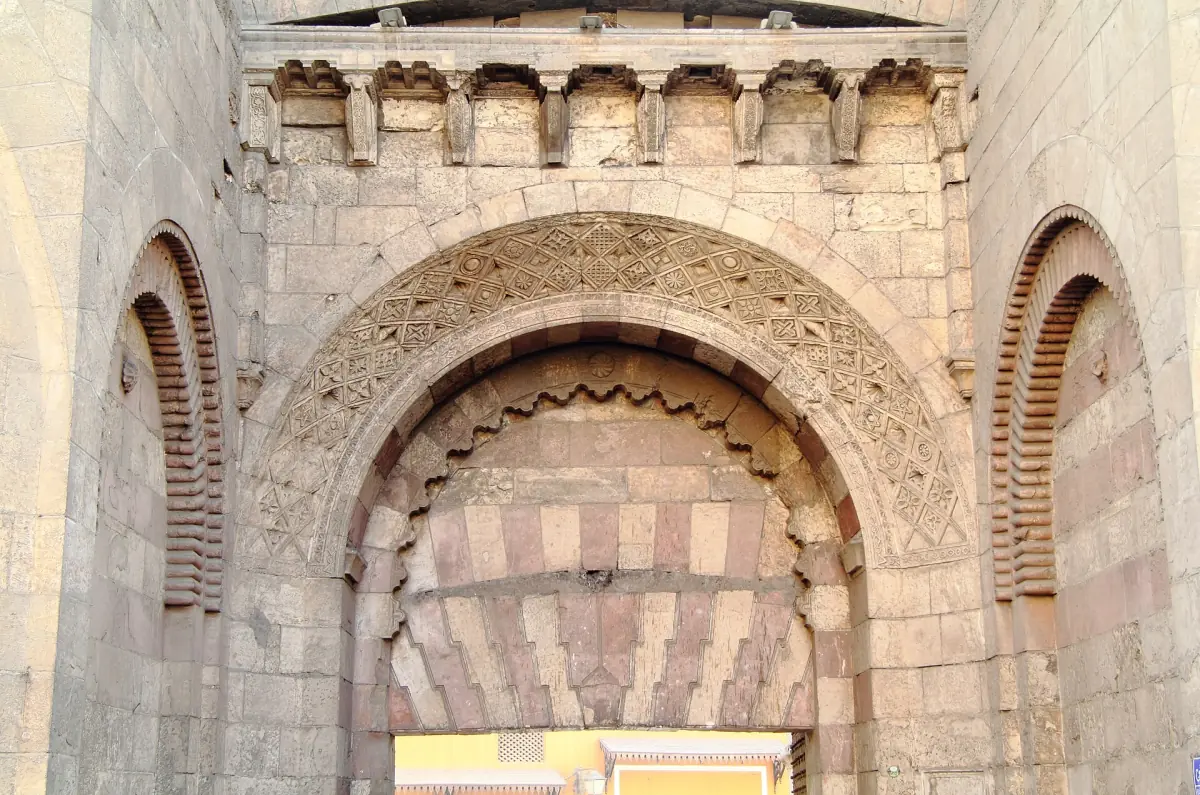
In 1511 the Mamluk sultan al-Ghuri had the old khan demolished and replaced by new lodgings, storerooms and shops. Much of the market you see today follows that rebuilding. One structure still stands from it: the gate known as Bab al-Ghuri or Bab al-Badistan.
So when the bazaar is called medieval, that means its layout and trading spirit, not every wall. Later centuries added more shops, and the lanes have been repaired many times.
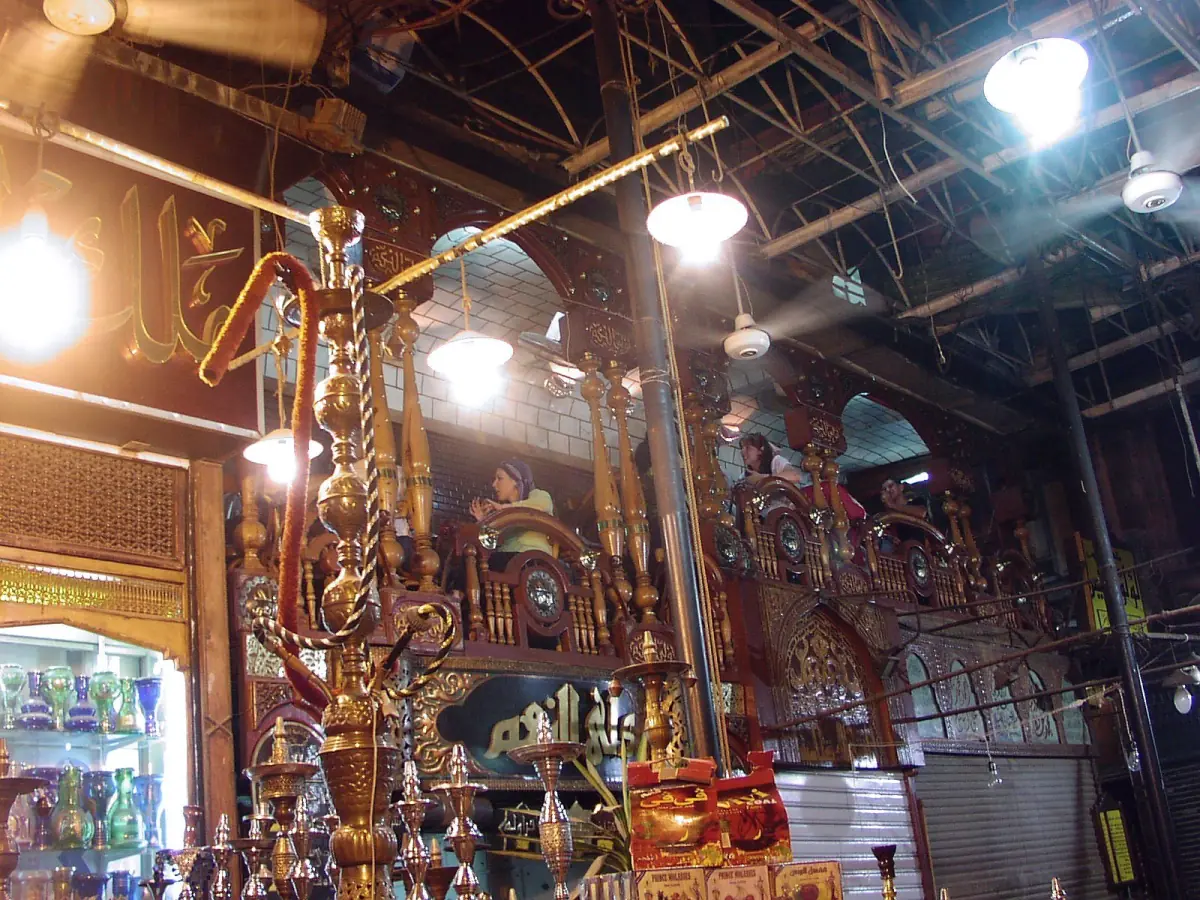
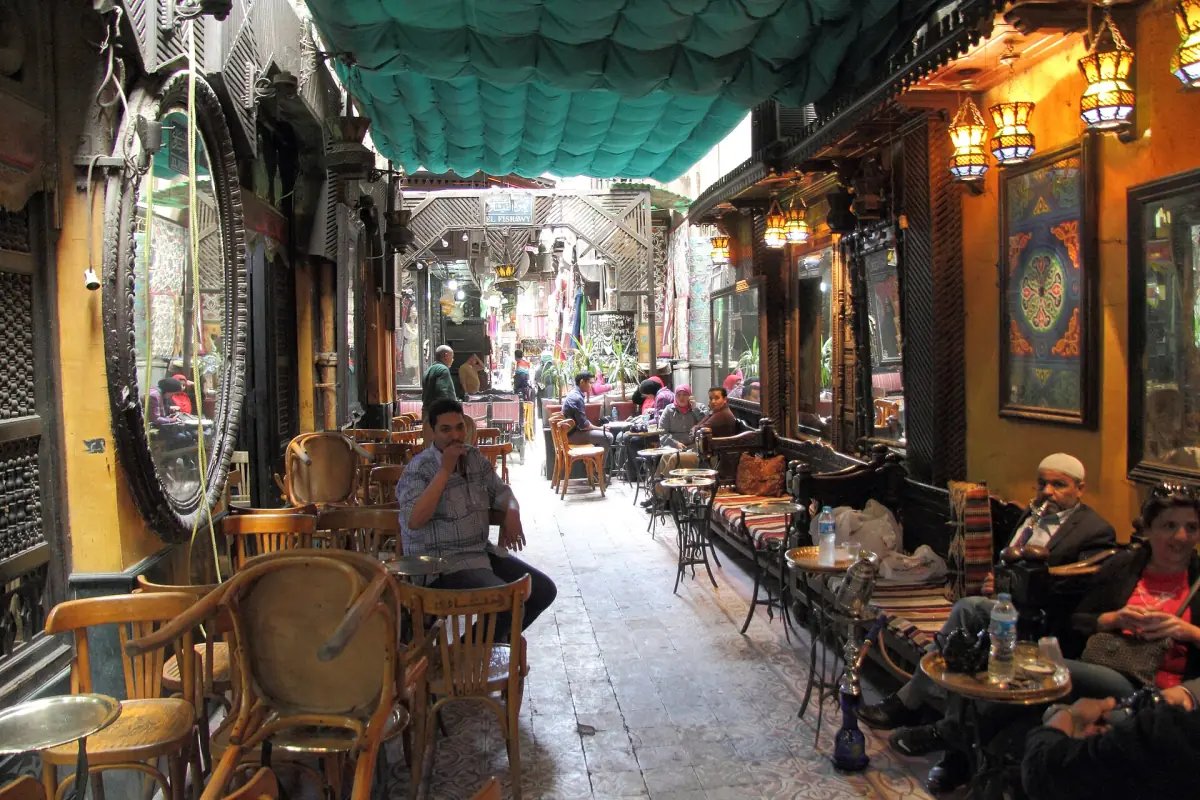
El-Fishawy, a historic café
El-Fishawy is a historic café in the Khan el-Khalili and Al-Hussein area. The café is dated to 1771, and its first licence to 1863. One corner of the café is named after the writer Naguib Mahfouz.
El-Fishawy is a place and a piece of cultural history. Opening hours and prices change, so check before you plan an evening there.
Recent history and the bazaar today
Attacks in 2005 and 2009
The bazaar was the target of bomb attacks in April 2005 and on 22 February 2009. Both belong to the history of the place. For the current situation, see our safety page.
Is Cairo safe? →Restoration since 2025
A programme around Al-Hakim Mosque and Al-Muizz Street renewed 28 façades and worked on 18 shops. Another covers 30 buildings in the Harat al-Rum area.
A working market
Shops open at their own hours. There is no single opening time for every trader and café.
What to buy →Where to read more
The mosques of the quarter are covered in our Al-Azhar Mosque guide, and the wider medieval city in the guide to Islamic Cairo.
Khan el-Khalili history: frequently asked questions
When was Khan el-Khalili founded?
In the 1380s, under Jaharkas al-Khalili.
Is the bazaar still the original medieval building?
No. The khan was demolished in 1511 and rebuilt under al-Ghuri, and later centuries added more. The layout and the trading spirit are medieval, but not every wall.
What is Bab al-Ghuri?
A surviving gate from the al-Ghuri rebuilding, also called Bab al-Badistan.
When was El-Fishawy founded?
The café dates to 1771, with a first licence in 1863.
Was Khan el-Khalili built by the Fatimids?
No. The Fatimid city came first, from 969, but the caravanserai was founded later, in the 1380s.