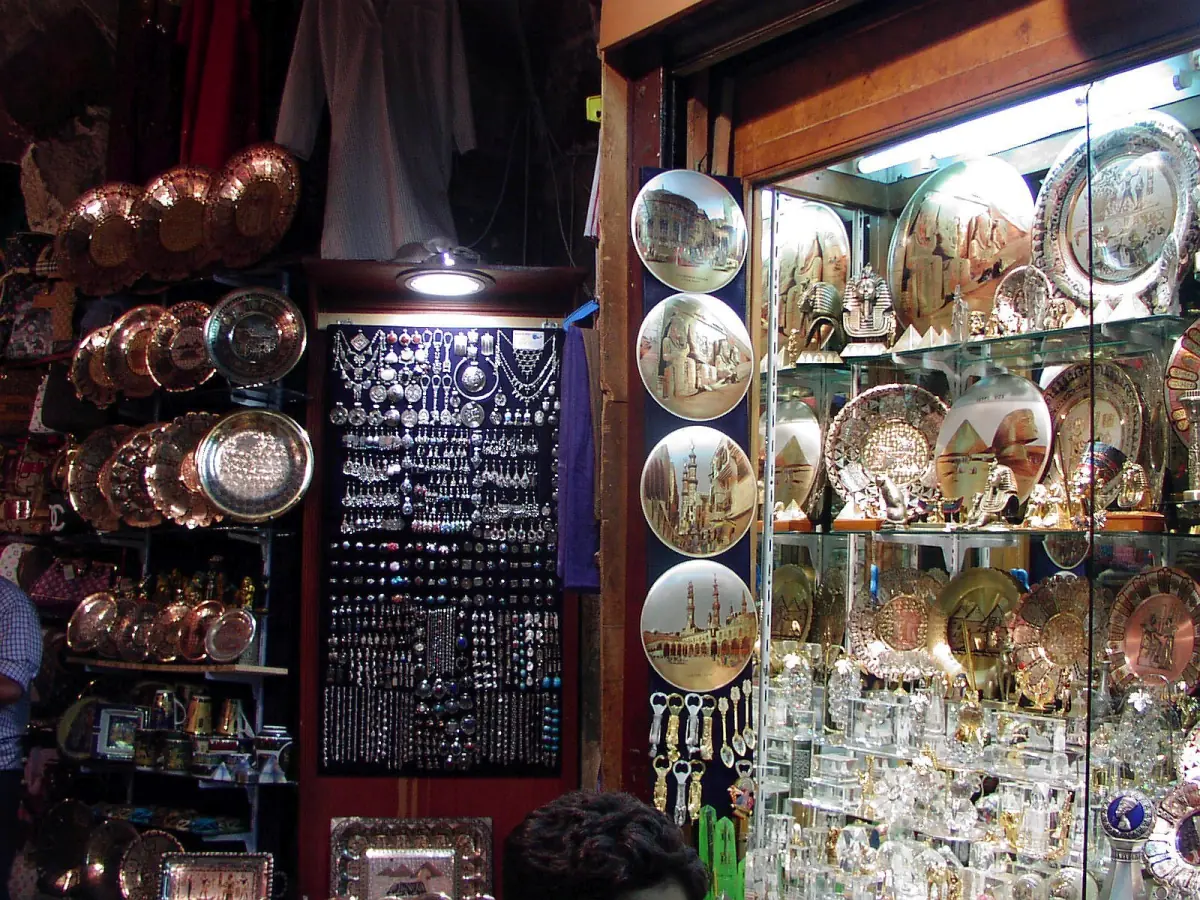
Souvenirs from Egypt in the bazaar
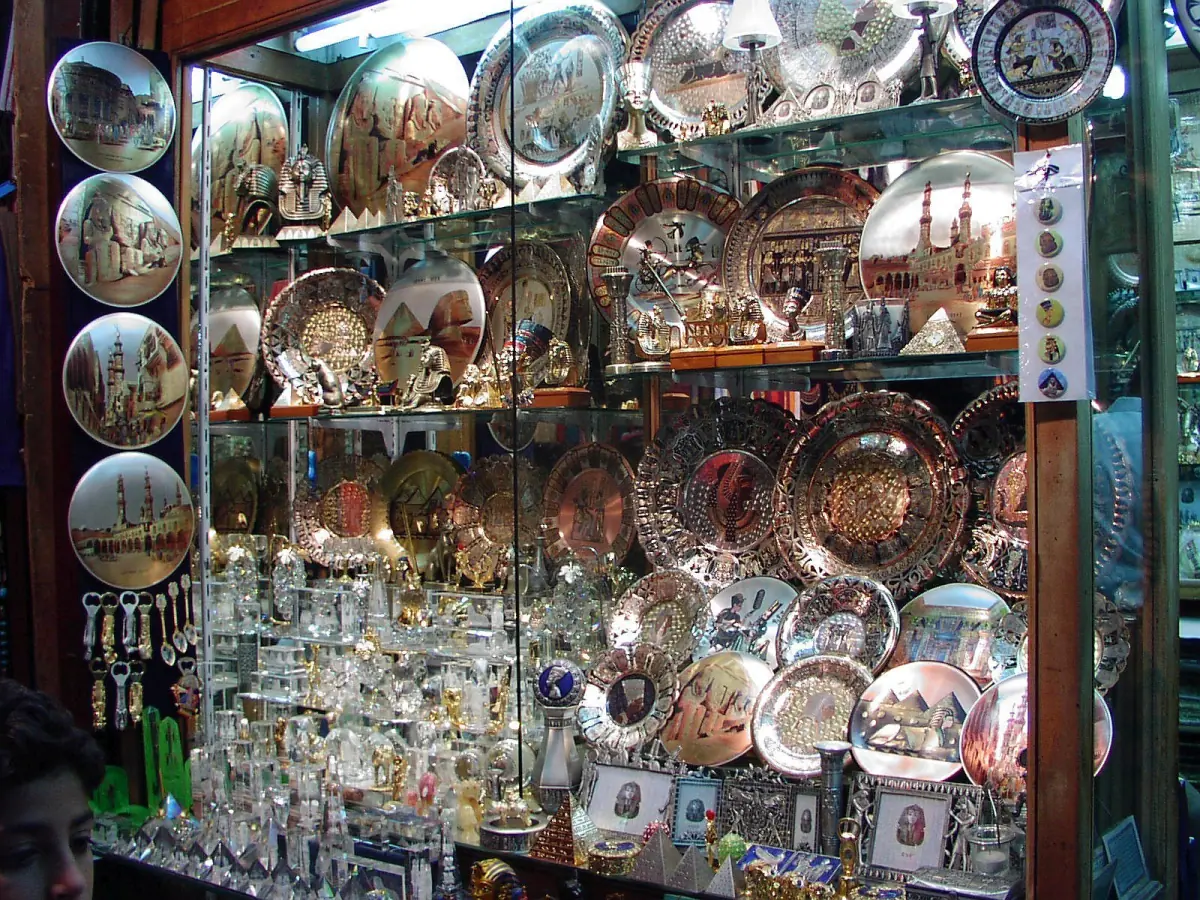
The bazaar has been a trading place for centuries, and its lanes still sort themselves loosely by trade. You find goldsmiths and silver sellers, coppersmiths with engraved plates and lamps, spice sellers, and stalls with glass perfume bottles, shisha pipes, magnets and replica figures. A guided walk, such as one of the Cairo bazaar tours compared on our tours page, helps you see the districts before you spend anything.
No guide can promise that a given item is handmade, local or what the seller says. Take your time, compare several shops, and buy what you like at a price you accept.
Our picks: shopping tours
All three are built around the markets. The first is a pure shopping tour, the second adds a lunch and a two-hour bazaar stop, and the third combines Al-Muizz Street with time in the bazaar.
Hand-picked tours, booked through GetYourGuide. Prices are indicative starting prices in US dollars (as of October 2026). Tap a tour for live availability and the current price in your currency.
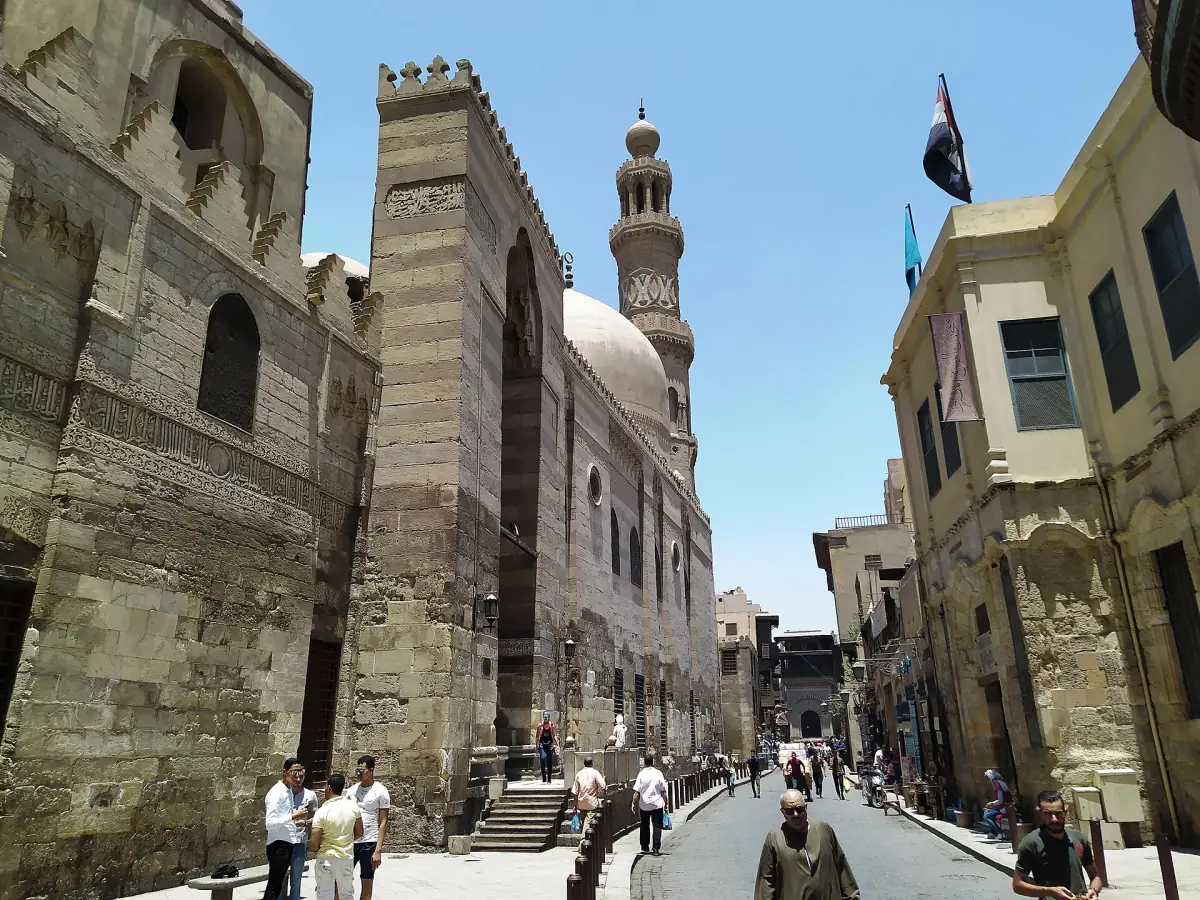
Al-Muizz Street and Khan el-Khalili on foot
- Entries to named sites
- Private guide and car
- Water included
Four hours with a private guide: about an hour and a half along Al-Muizz Street and another in the bazaar, which includes a shopping stop.
Check availability →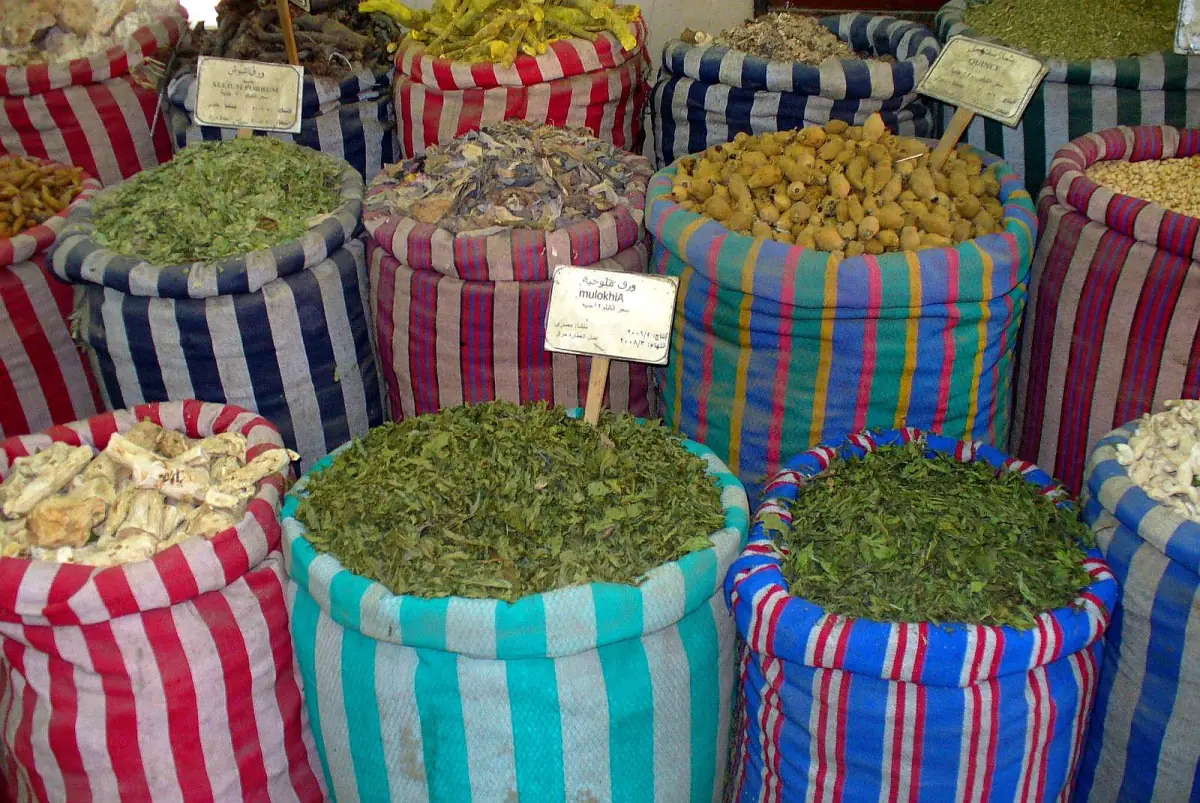
Half day through Cairo's local markets
- Private car and guide
- Lunch included
- Two hours in the bazaar
A market and shopping tour, not a monument visit: Khan el-Khalili is a two-hour shopping stop, with lunch on the way. Private car and guide throughout.
Check availability →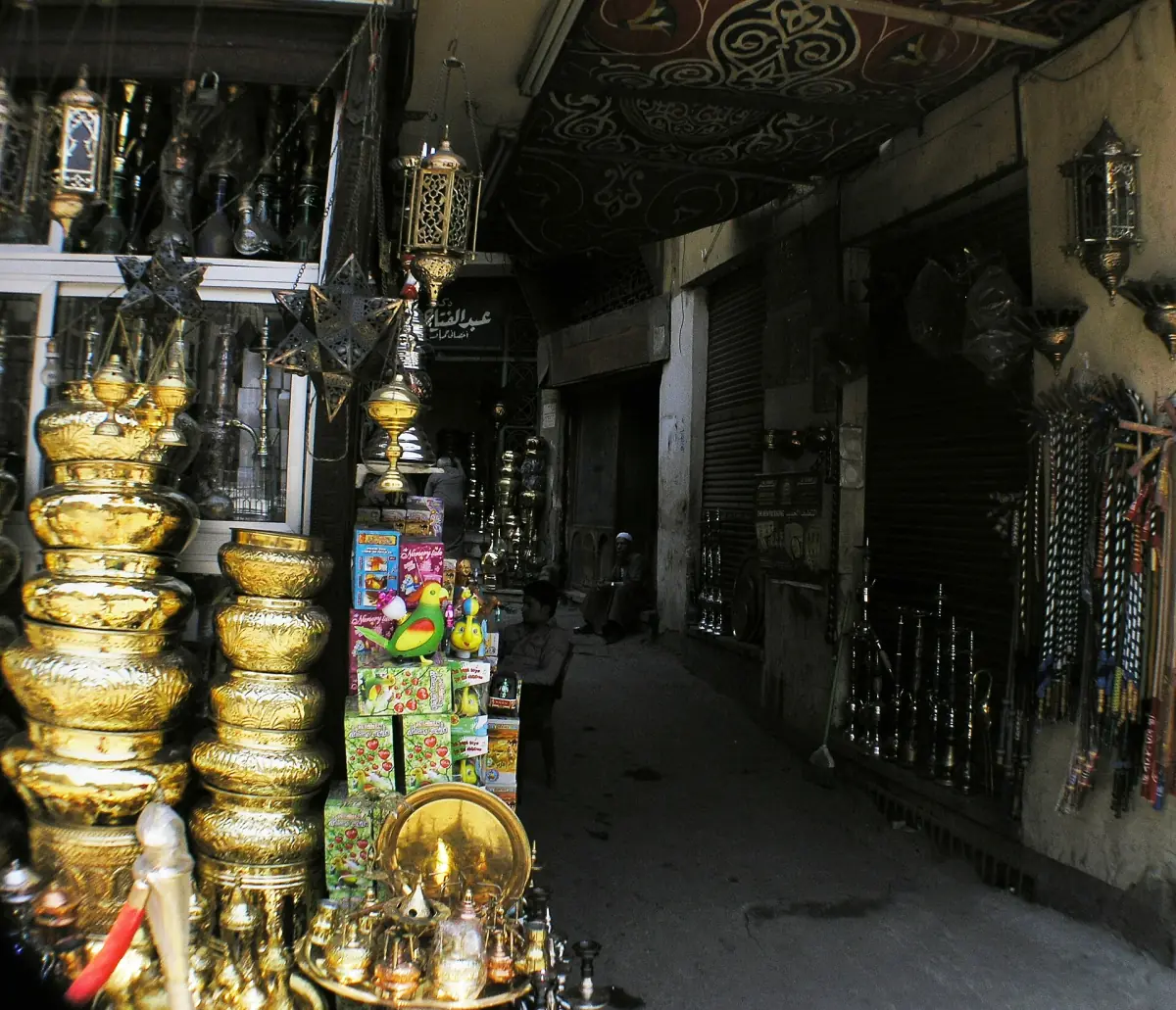
Private shopping tour: local markets and Khan el-Khalili
- Private guide and car
- Hotel pickup
- Khan el-Khalili
A tour built around shopping, with your own guide and car through local markets and the bazaar. Water is included.
Check availability →Bazaar tours and shopping walks in Cairo
Guided walks through the bazaar and Islamic Cairo, with live prices and availability.
What to buy in Khan el-Khalili
The typical souvenirs and what to keep in mind for each.
Brass, copper and lamps
Engraved plates, trays and lamps fill shop fronts in the metalwork lanes. Compare the weight and engraving between shops, and ask whether a piece is made here or elsewhere.
Egyptian cotton
Cotton bed linen and towels are common Egypt souvenirs. A shop sign saying Egyptian cotton does not prove where the cotton grew, so look at the fabric and the label before you buy.
Egyptian jewelry and gold
The gold and silver market is one of the khan's main trades. Ask what the piece is made of, compare shops, and take your time before you pay for gold or silver.
Cartouche necklaces
Gold cartouches are a classic gift. A cartouche is an oval frame that holds a name written in hieroglyphs. Check the spelling and the material before you leave.
Egyptian perfume bottles
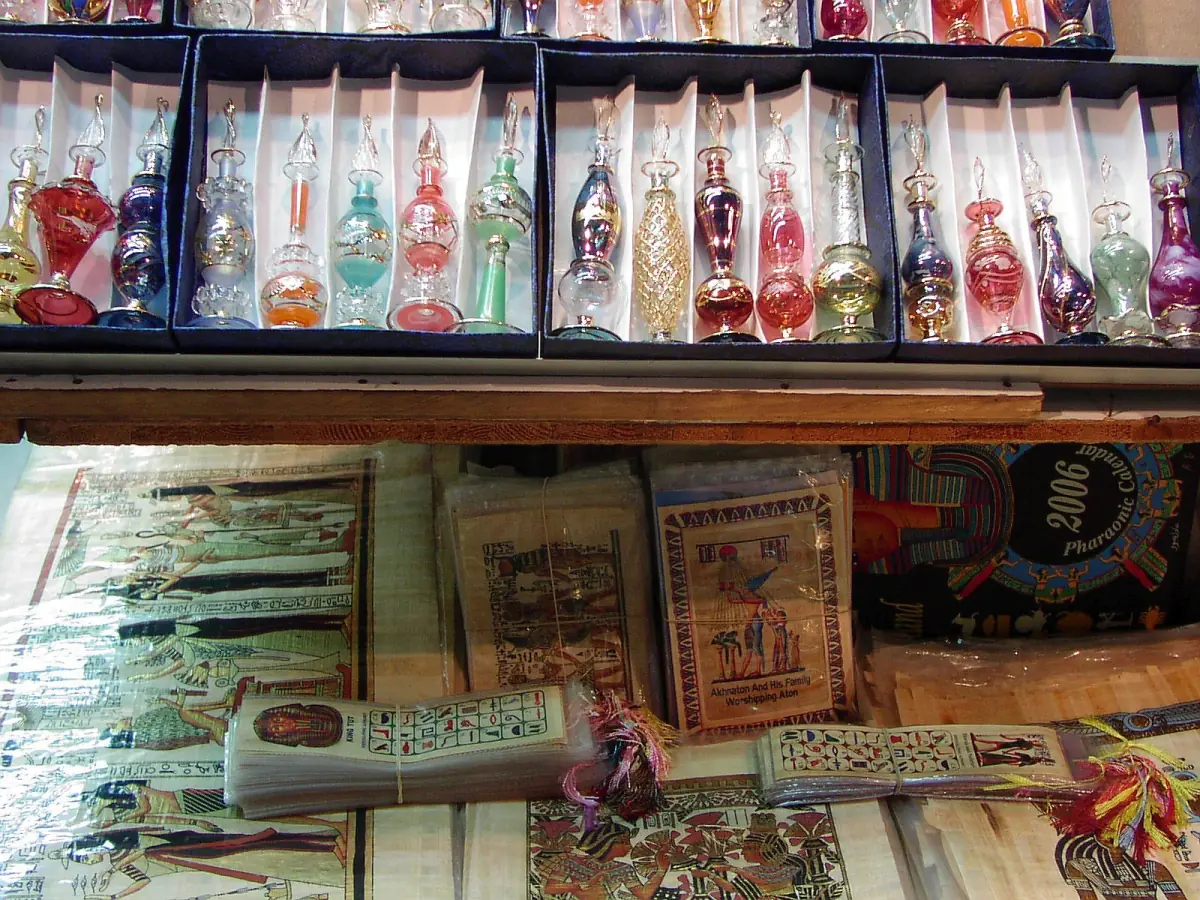
Stalls sell glass perfume bottles in many colors. Treat them as decorative glass first. If you buy oil or perfume inside the bottle, you cannot confirm its content in the shop, so smell and compare before you pay.
Papyrus pictures
Papyrus pictures are on the typical souvenir list. Our papyrus guide explains how the material is made and what you can and cannot judge when you buy.
Papyrus guide →Shisha, spices and small gifts
Items that need a second thought at the border.
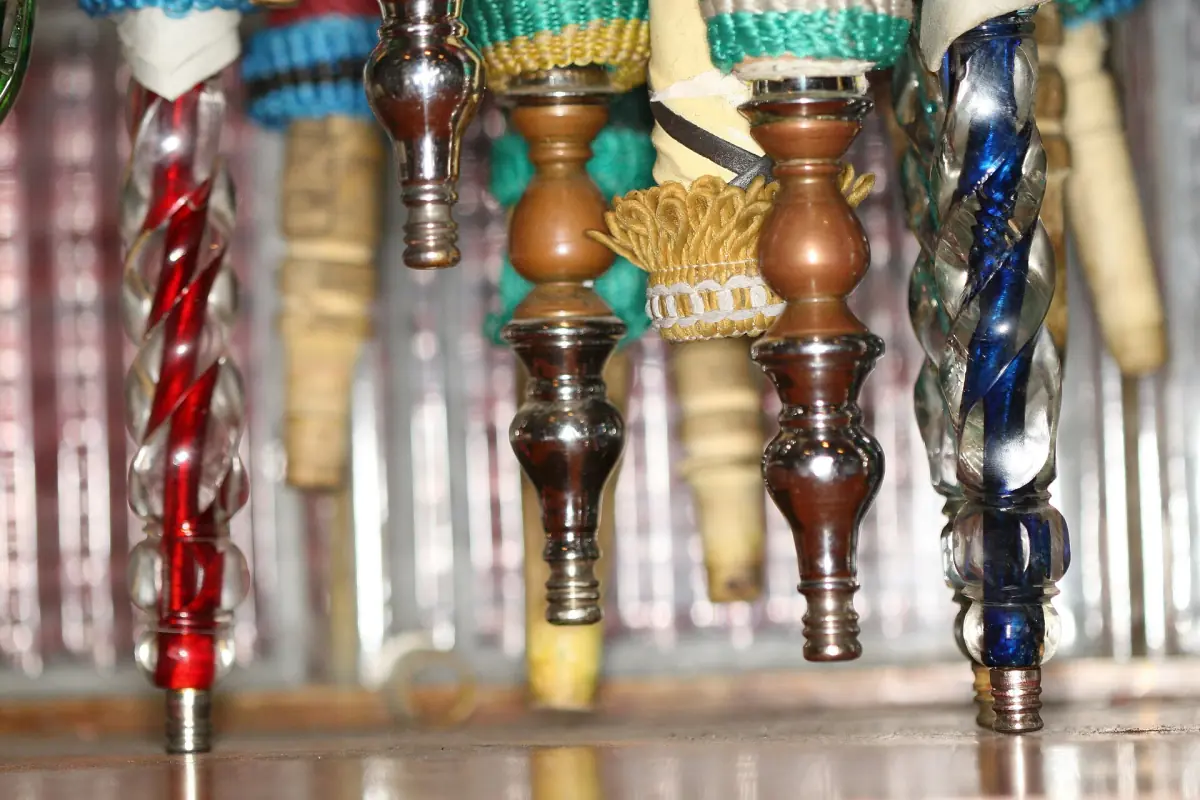
Shisha pipes and spices are sold at many stalls. Both are easy to buy and harder to take home. Rules on plants, food and tobacco depend on the customs of your destination country, so check them before you buy.
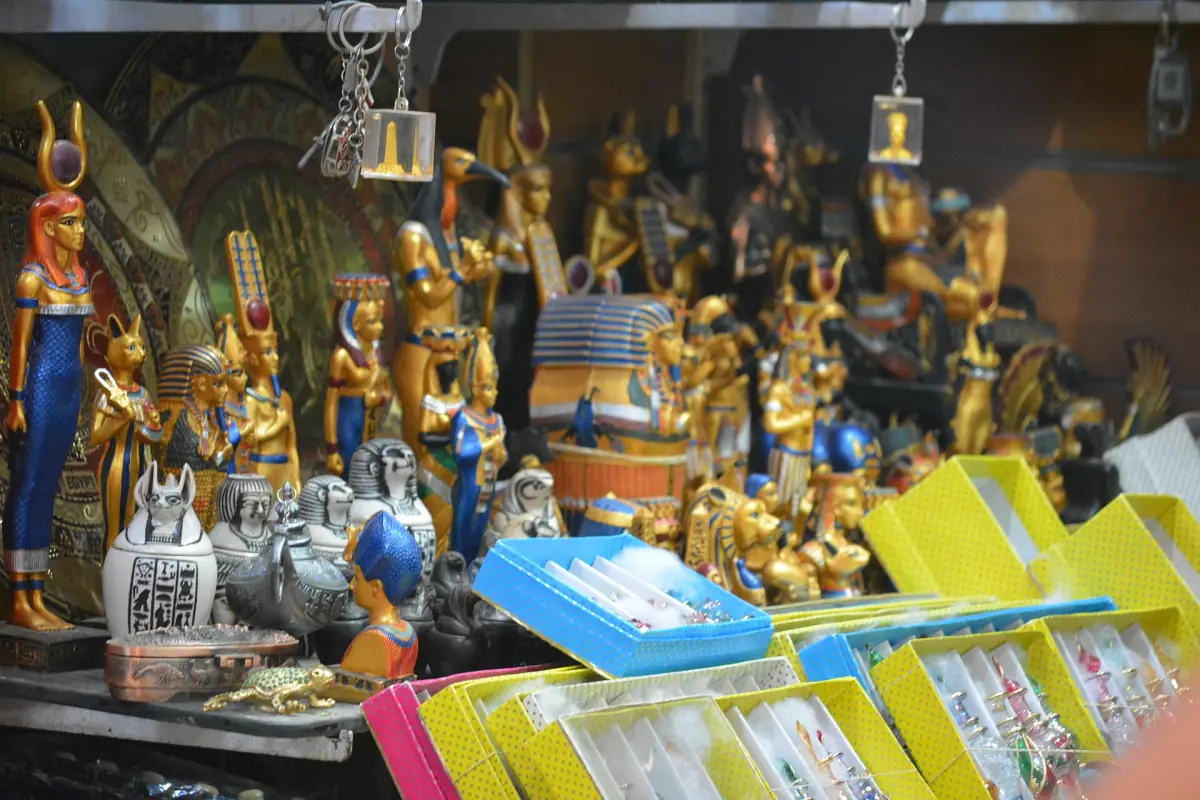
Magnets, keyrings and small replica figures make light gifts. If you buy a replica of an ancient object, treat it as a replica: never present it as an antique.
Haggling, payment and export
Simple rules for shopping in the bazaar.
Haggling
Some shops have fixed prices and others expect you to negotiate. No fixed discount rate applies, so stay friendly, ask the price of several similar items, and walk on if the price is not right.
Tipping and bazaar tips →Export of antiquities
Ancient Egyptian antiquities may not be taken out of Egypt, and re-exporting Egyptian antiquities that you brought in is banned as well. Modern replicas are fine, but never describe a replica as a real antique.
Pack for the trip home
Brass is heavy and glass breaks. Plan your luggage space before a big purchase, or ask the shop whether it can pack the piece.
For a wider look at what to see in the city, see things to do in Cairo, or plan the ride to the bazaar with the Cairo Airport guide.
Souvenirs from Egypt: frequently asked questions
Which souvenirs are typical in Khan el-Khalili?
It depends on your taste and budget. Brass and copper, cotton linen, gold and silver jewelry, cartouche necklaces and perfume bottles are the classic choices.
Can I trust that Egyptian cotton or papyrus is genuine?
No label or seller can give you a guarantee. Look at the item closely, compare shops and buy what you like for the price you accept.
Do I have to haggle?
In some shops, yes. Other shops have fixed prices. Ask politely and do not rely on a fixed discount rate.
Can I take antiques out of Egypt?
No. Ancient Egyptian antiquities may not be exported. Modern replicas are fine as replicas.
Can I bring spices or shisha home?
Rules depend on your destination country. Check plant, food and tobacco rules with its customs before you buy.