Papyrus in Egypt: the plant and the material
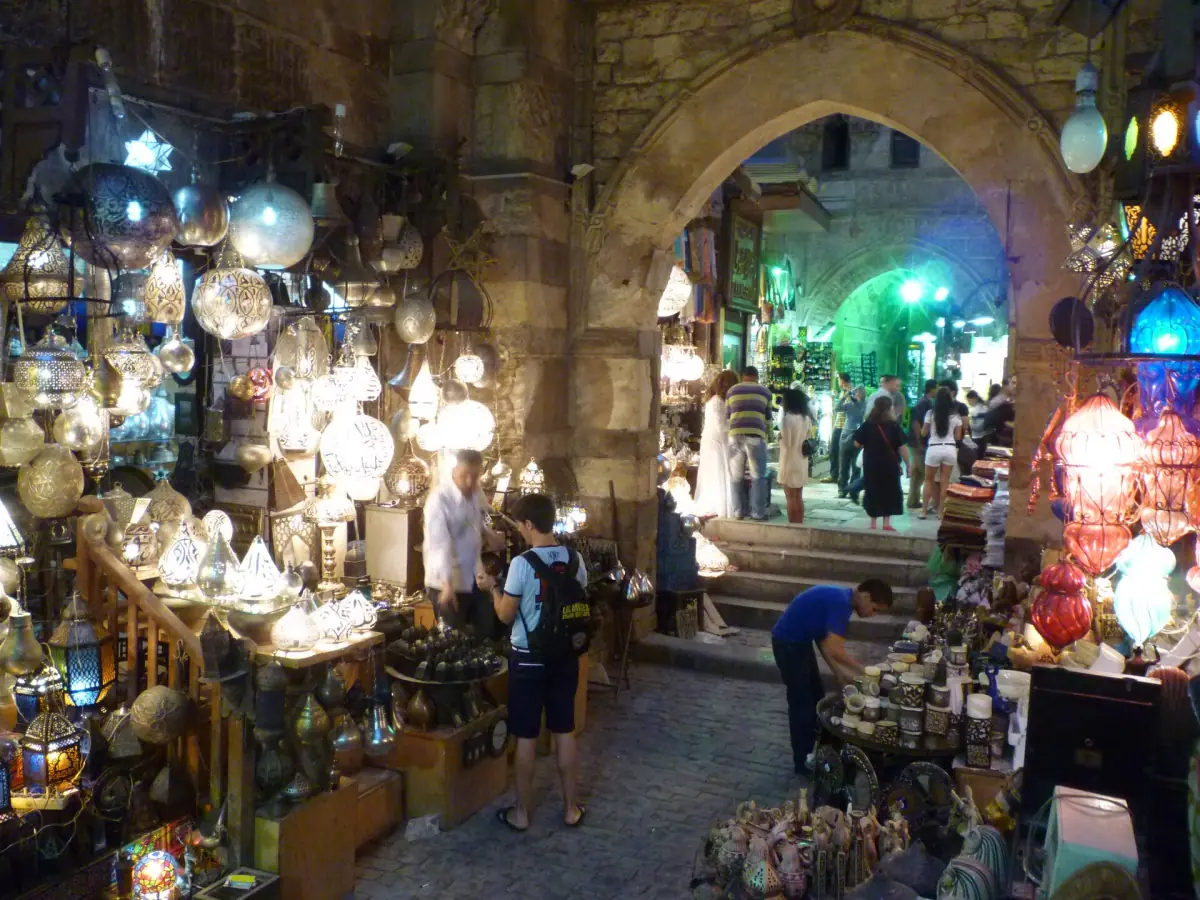
The word papyrus names a plant and the writing material that was made from it in ancient Egypt. Today you meet papyrus in the bazaar as painted sheets, bookmarks and small framed pictures. Papyrus pictures are on the standard list of Egypt souvenirs, so you will see them in many shop windows in Khan el-Khalili.
This page explains the material before it talks about buying. If you know how a sheet is made, you can look at it with fewer illusions. A guided walk, such as the Cairo bazaar tours, is a relaxed way to see the shops before you decide where to look closer.
Bazaar tours and Cairo day trips
Guided walks through the bazaar and Islamic Cairo, with live prices and availability.
How papyrus is made
From the stem of the plant to a sheet.
Strips of pith
Thin strips are cut from the soft inner core of the stem. They are laid next to each other to form a layer.
A crossing layer
A second layer of strips is laid across the first. The two layers are joined, pressed and dried to form a sheet.
Ancient methods
How the sheets were pressed and dried in ancient times is only partly understood, so there is no single proven ancient recipe.
What you can see in a sheet, and what it proves
Look closely, but do not over-read what you see.
Held up to the light, a sheet of papyrus shows the two crossing layers of strips. That structure is a feature of the material. It does not prove how old the sheet is, where it was made, whether it was made by hand or how pure the material is.
This is why there is no reliable shortcut for a buyer. No simple test tells every imitation from a real sheet, and a certificate or seal from the seller is no proof either. A single feature, such as a color, is not a safe sign of real or fake.
How to buy papyrus in Cairo
Practical steps instead of a trick.
Look at several shops
Compare sheets of the same size across shops before you decide. Differences in thickness, surface and how the strips join are easier to see side by side.
Hold it to the light
Check the crossing layers and whether the sheet is even. Handle it gently, because the material can crack under strain.
Ask what it is
Ask the seller plainly what the sheet is made of, and whether the painting is by hand or printed. Judge the answer for yourself.
Do not run harsh tests
Do not fold, wet or burn a sheet to test it. These tests are not reliable and they damage what you want to take home.
Treat it as a picture
If you like the design and the price is fair, a papyrus picture is a good souvenir whatever its exact origin. Do not pay an antique price for a modern sheet.
Caring for papyrus at home
The material is more fragile than it looks.
Papyrus can break easily under mechanical strain. Old pieces can become brittle, the edges can fray and the material can curl. Handle a sheet gently and do not fold it.
Papyrus pictures from the bazaar are modern products. Ancient papyrus is an antiquity, and ancient Egyptian antiquities may not be exported from Egypt. Do not buy anything sold as an ancient papyrus.
For other souvenirs and how to shop in the bazaar, see souvenirs from Egypt, and for haggling and scams see bazaar tips.
Papyrus in Egypt: frequently asked questions
What is papyrus made of?
Papyrus is made from the inner pith of the papyrus plant's stem. Thin strips are laid in two crossing layers, pressed and dried.
How can I tell if papyrus is real?
There is no quick test that settles it. Held to the light, a sheet shows crossing layers of strips, but that does not prove age, origin or hand-making. Compare shops and buy a design you like at a price you accept.
Should I fold or burn a sheet to check it?
No. These tests are not reliable and they ruin the sheet.
Can I take papyrus out of Egypt?
Modern papyrus pictures are souvenirs. Ancient papyrus is an antiquity and may not be exported.
Where can I see papyrus on sale?
Papyrus pictures are sold in many shops in Khan el-Khalili. Compare several before you buy.